New Construction
Creating a new garden in less than ideal soil
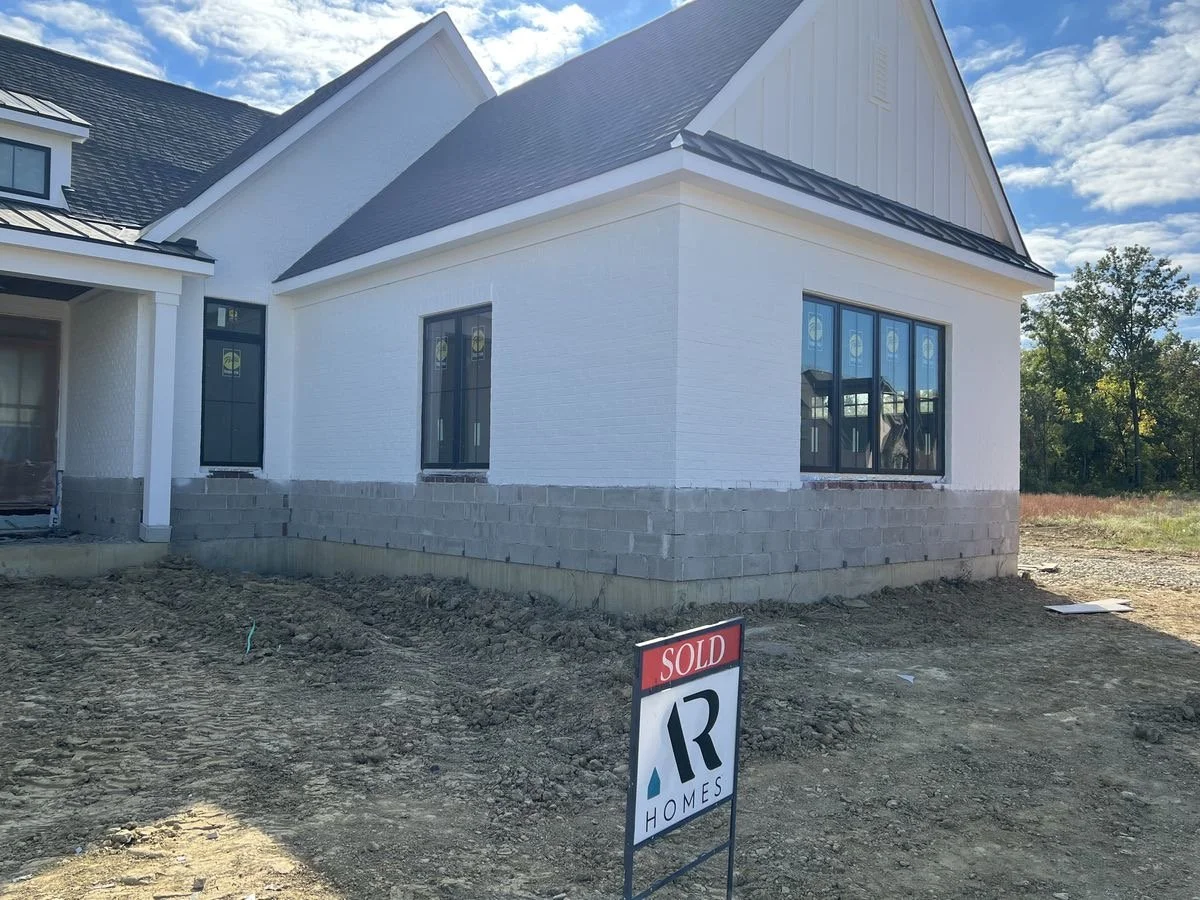
Planting in the typically poor quality soil at a construction site presents numerous challenges. The native topsoil, rich in organic matter and healthy nutrients, is usually scraped away, leaving a layer of slow draining clay compacted by heavy machinery. The lack of microbial life and aeration, compounded by the presence of debris like drywall and concrete, does not create an environment conducive to growing a lush, beautiful garden.
In order to overcome these challenges, it is important to first break up the compacted layers using a rototiller. This fractures the soil, creating channels for air and water. Once the soil is loose, it is then important to amend the soil with substantial amounts of organic materials like compost, manure, and leaf mold. These will improve the structure and water retention of the soil, while providing essential nutrients.
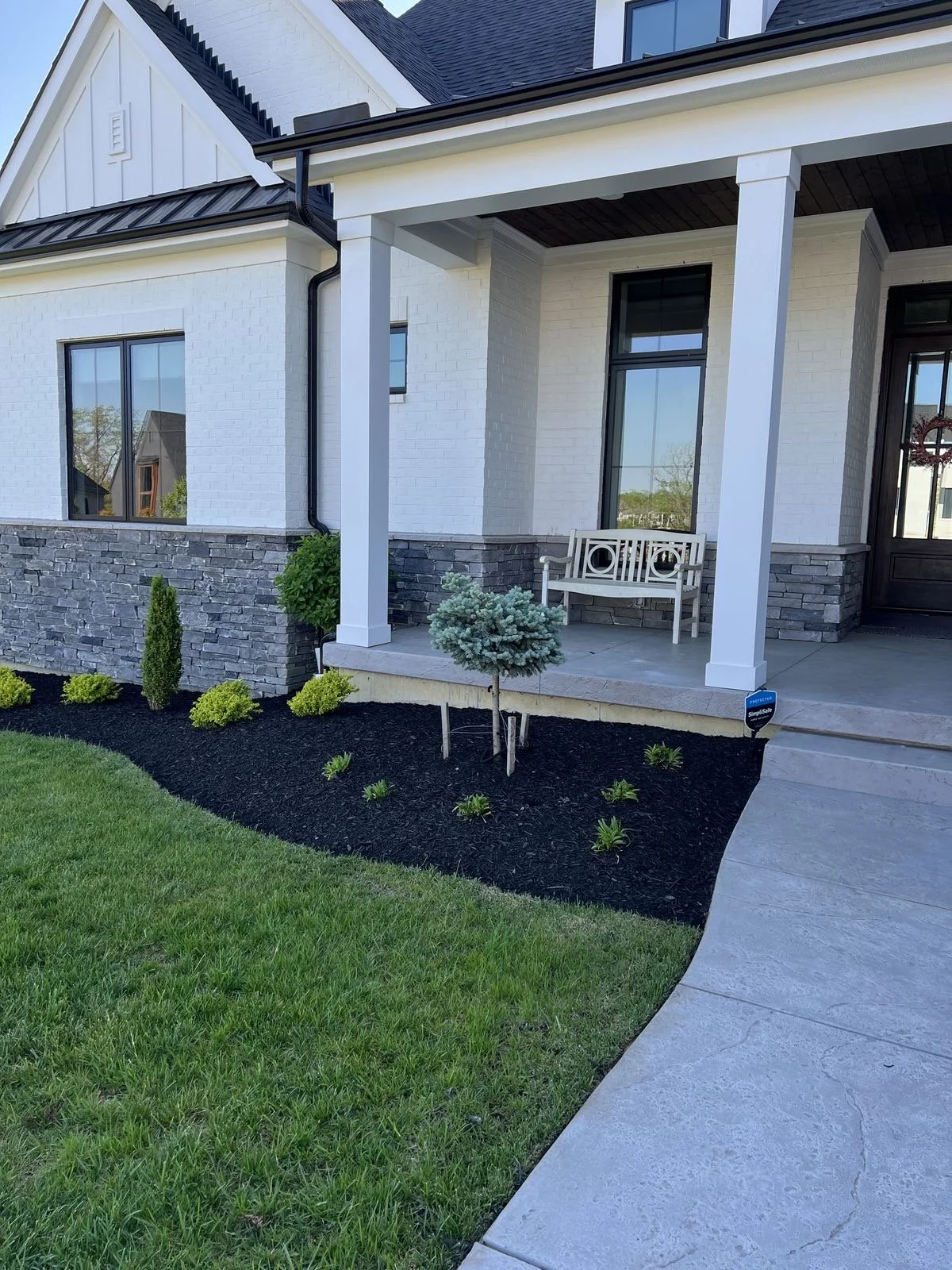
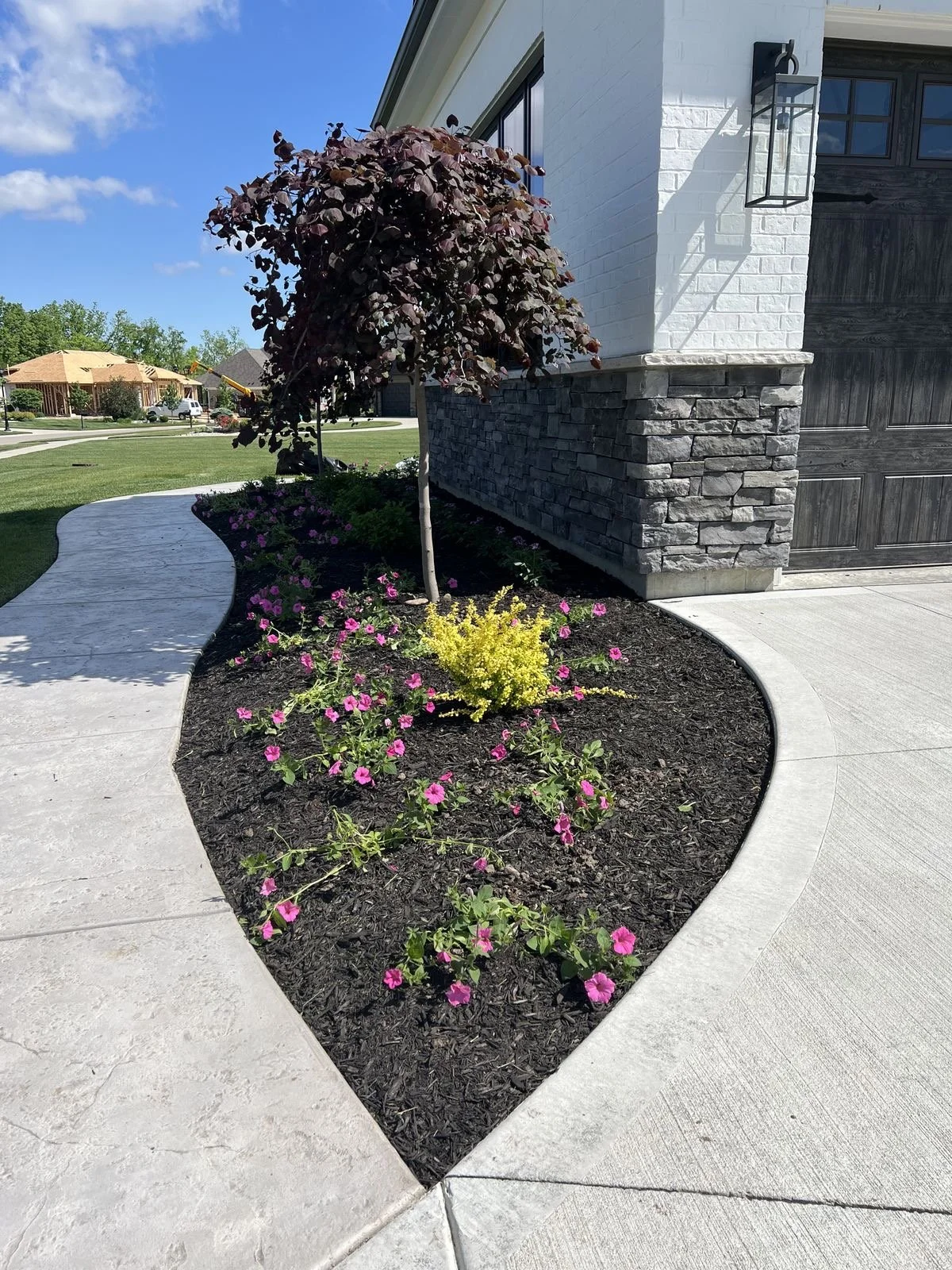
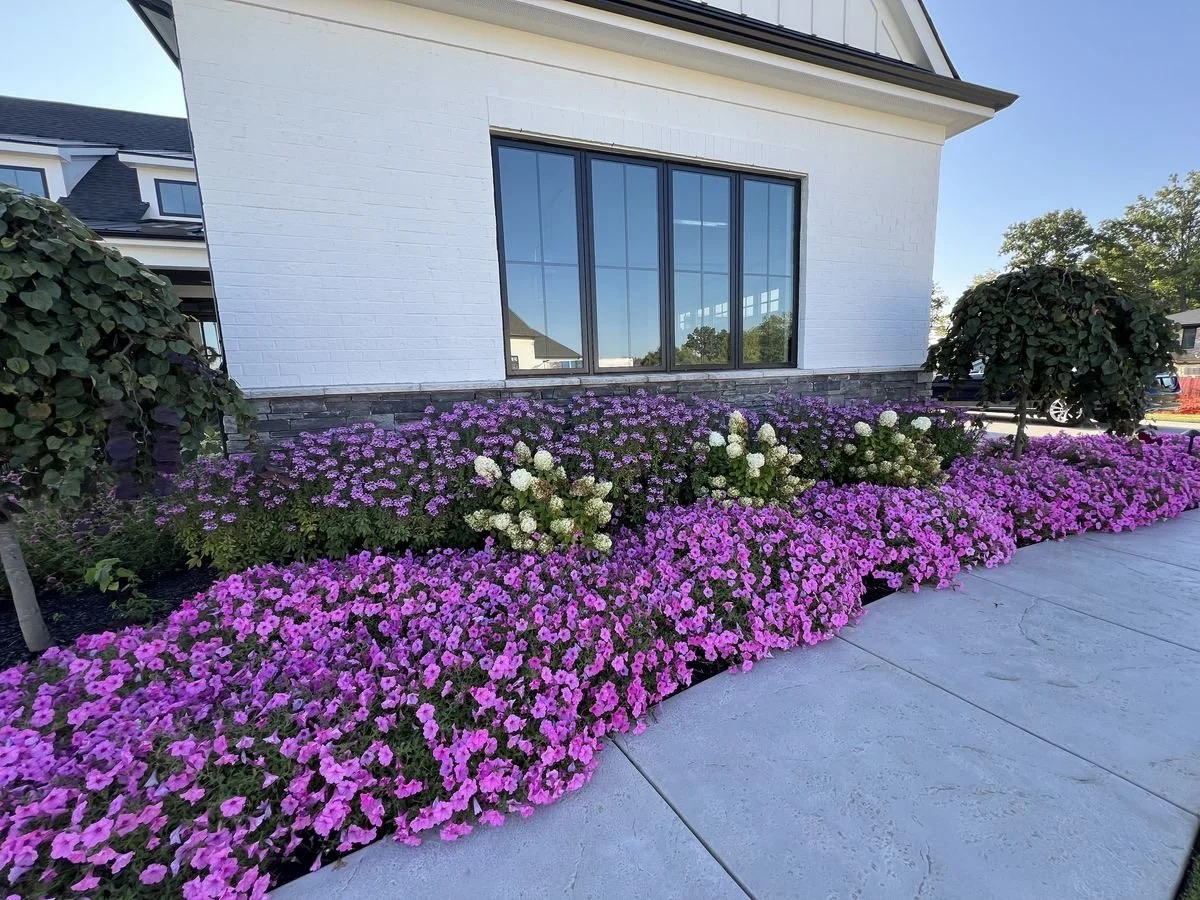
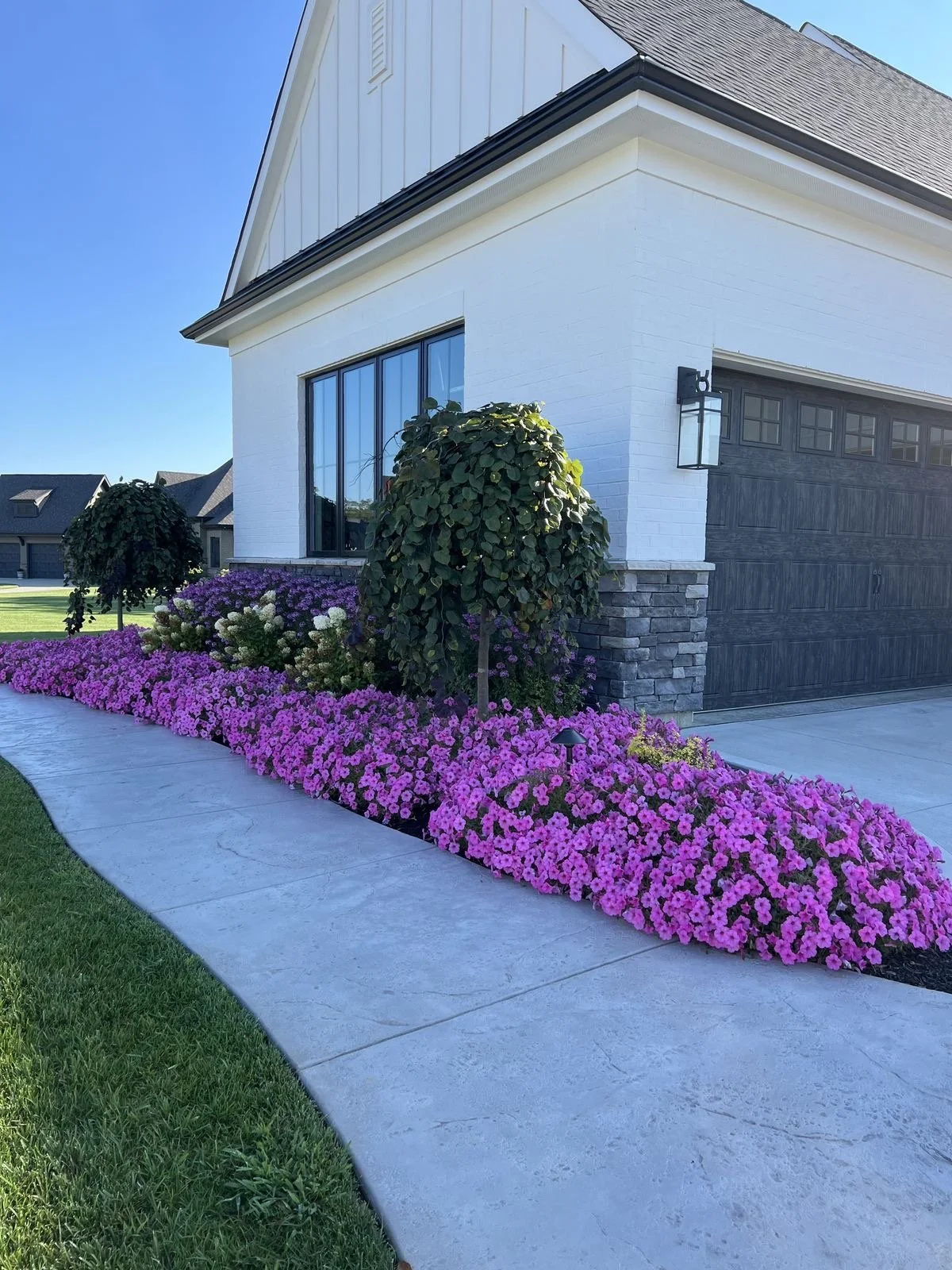
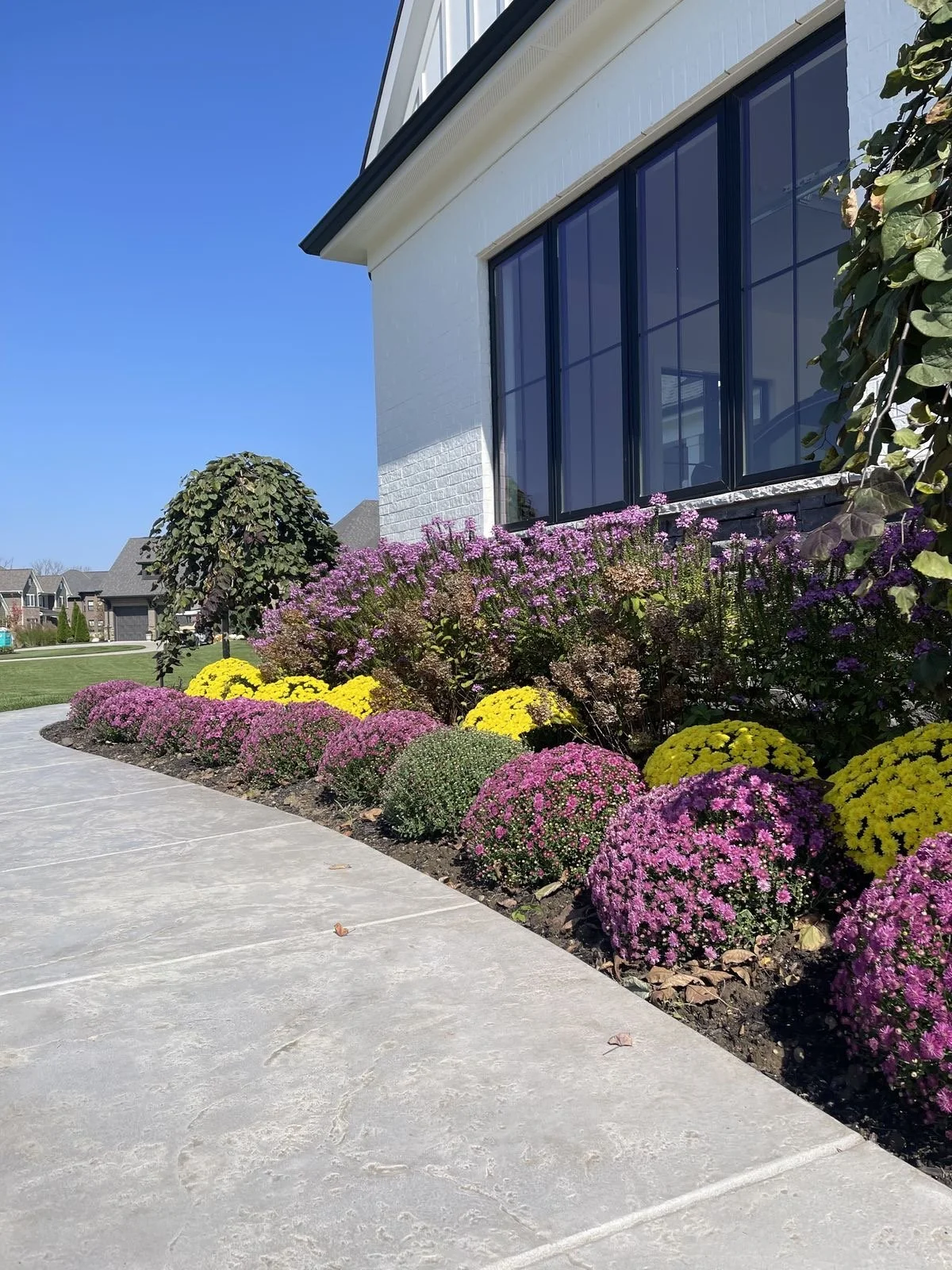
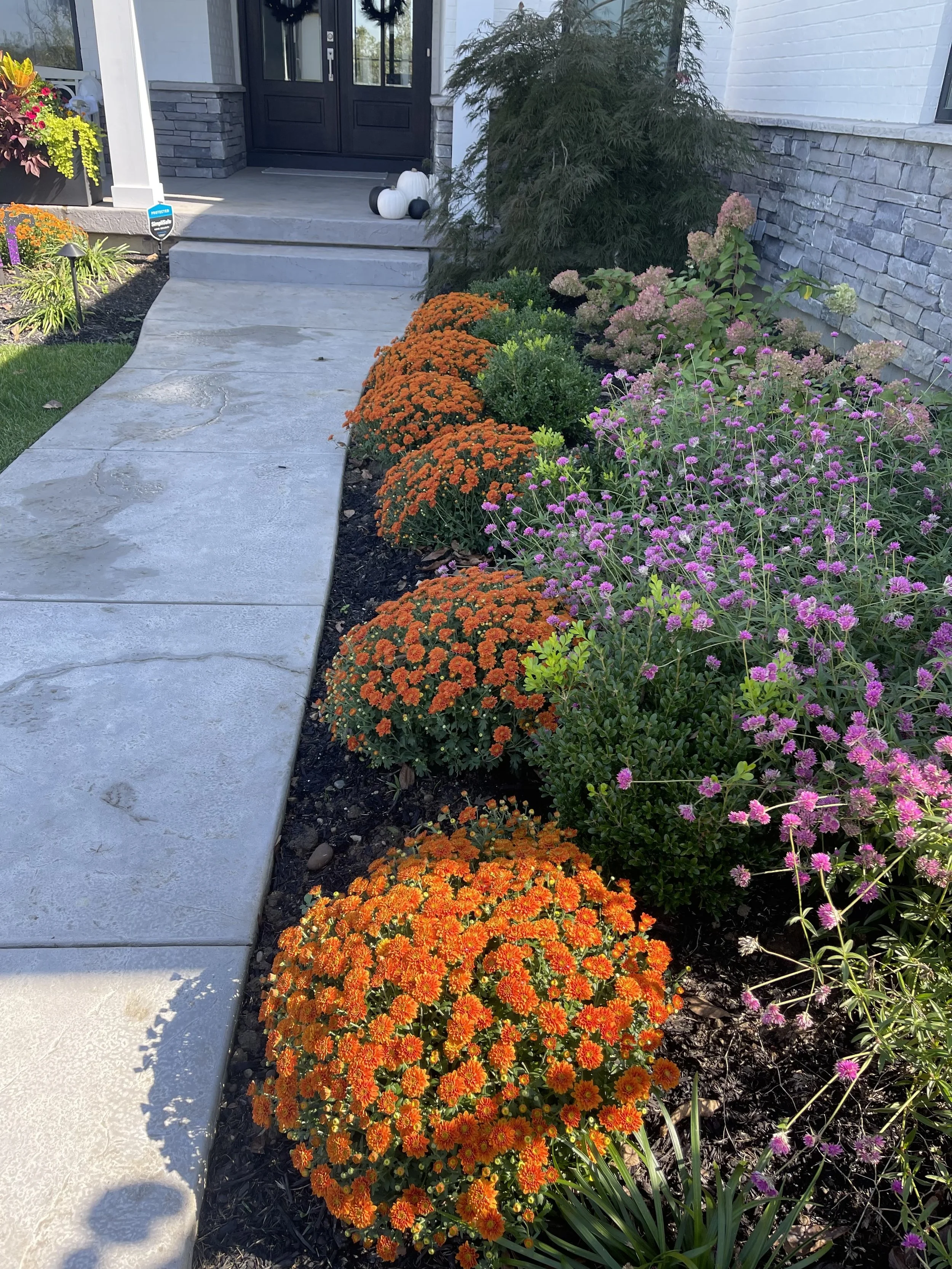
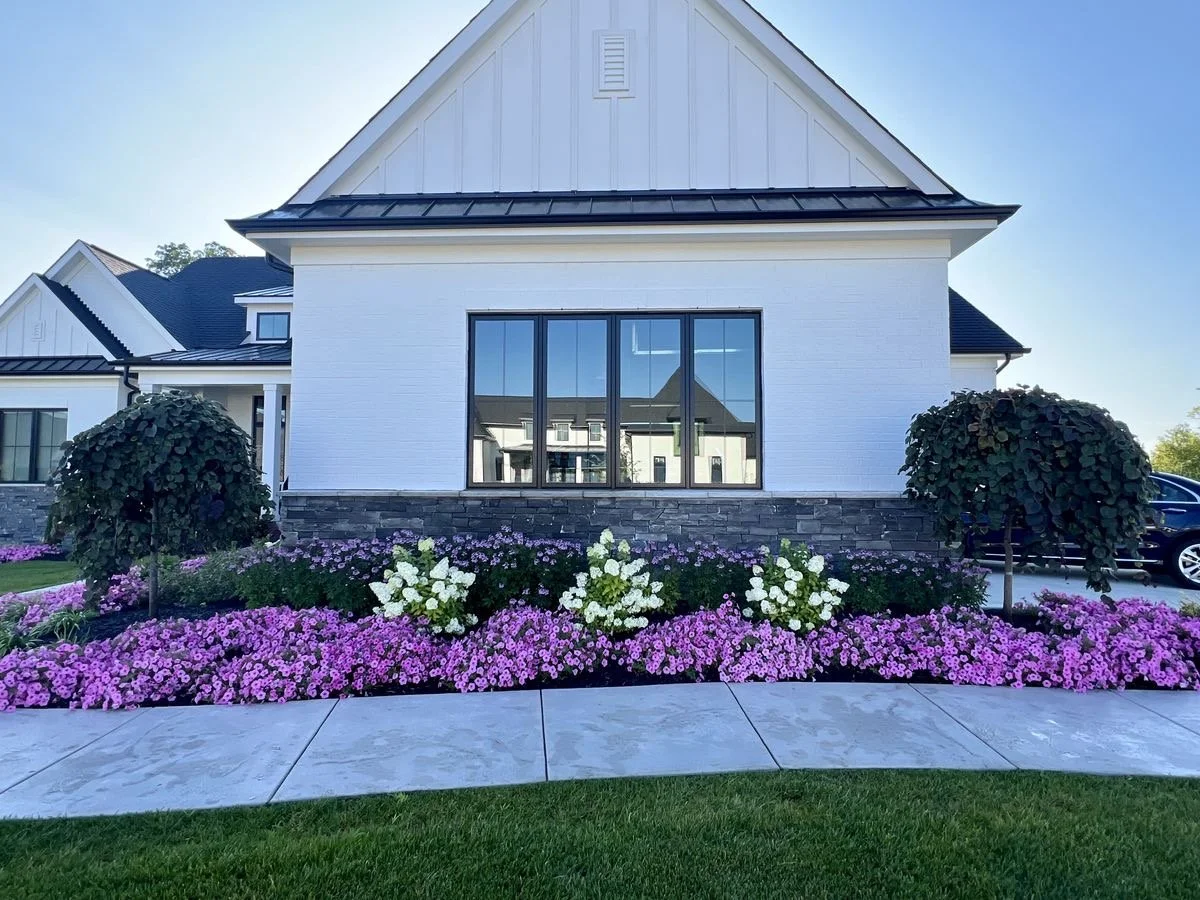
I added many bags of a compost/manure mix to the initial plantings of the garden I designed for this beautiful new home. When I switch out colorful annuals from season to season, I continue to add more compost/manure which is then topped with a fresh layer of mulch. As the mulch breaks down, it will also help improve the soil quality.
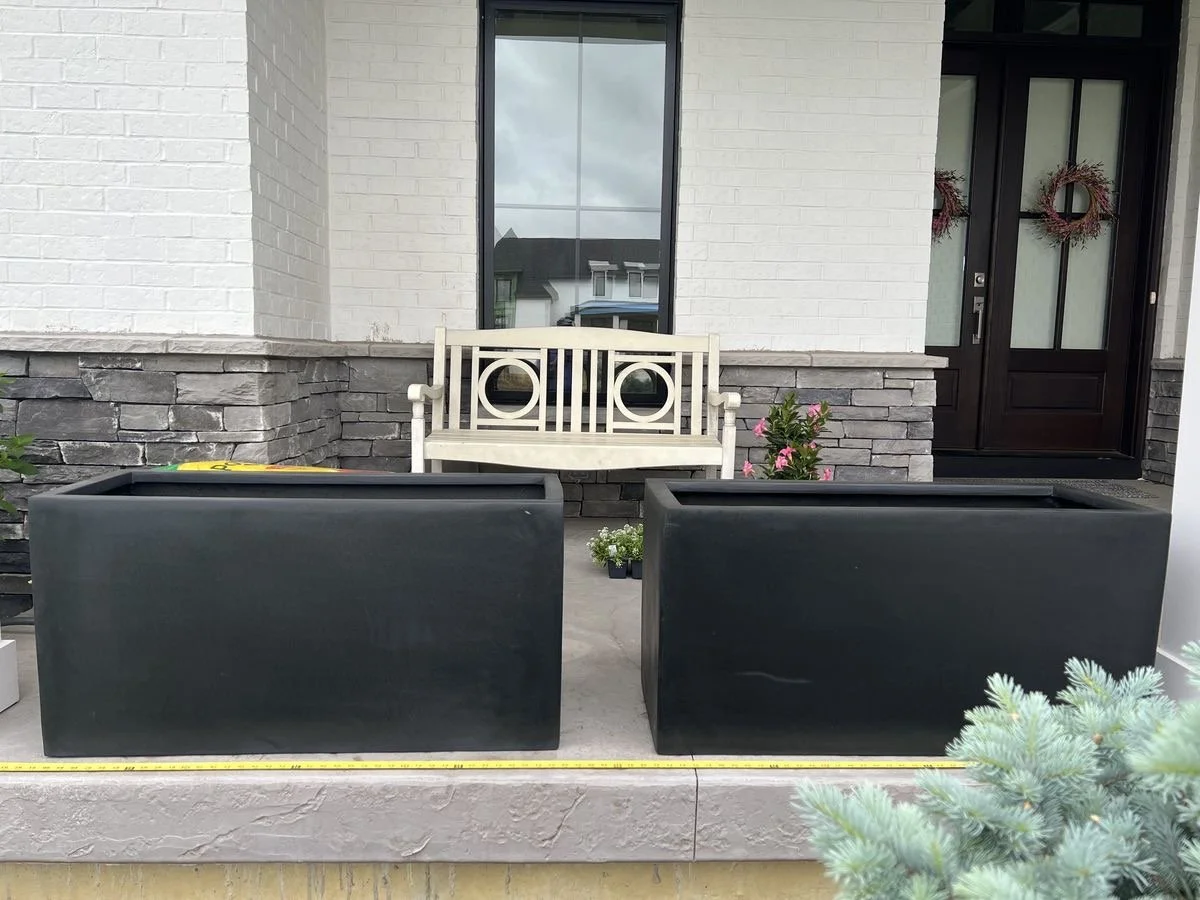
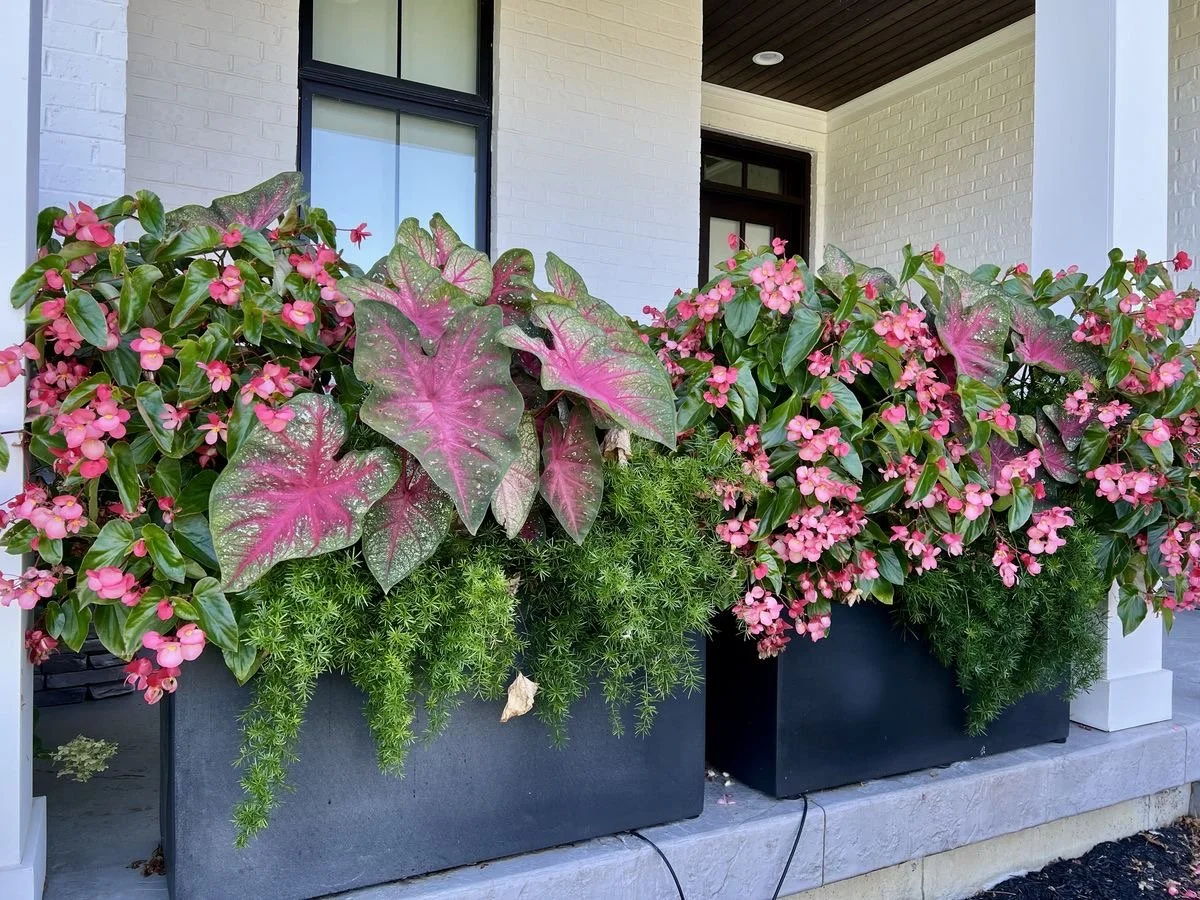
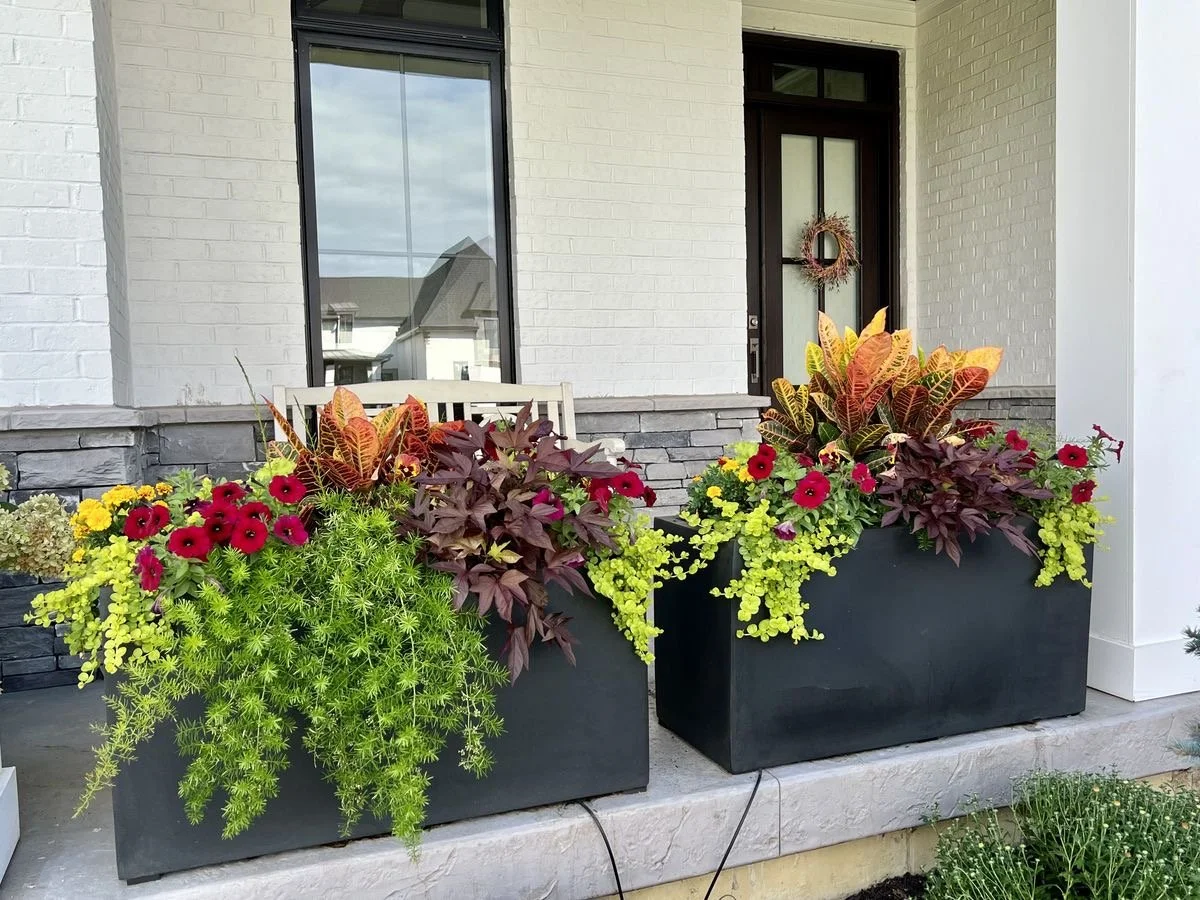
In addition to the colorful trees, shrubs, perennials, and annuals planted in this design, the space also called out for large containers on the front porch to welcome guests with seasonal color. The combo of in-ground and elevated color certainly creates a joyful and inviting space.
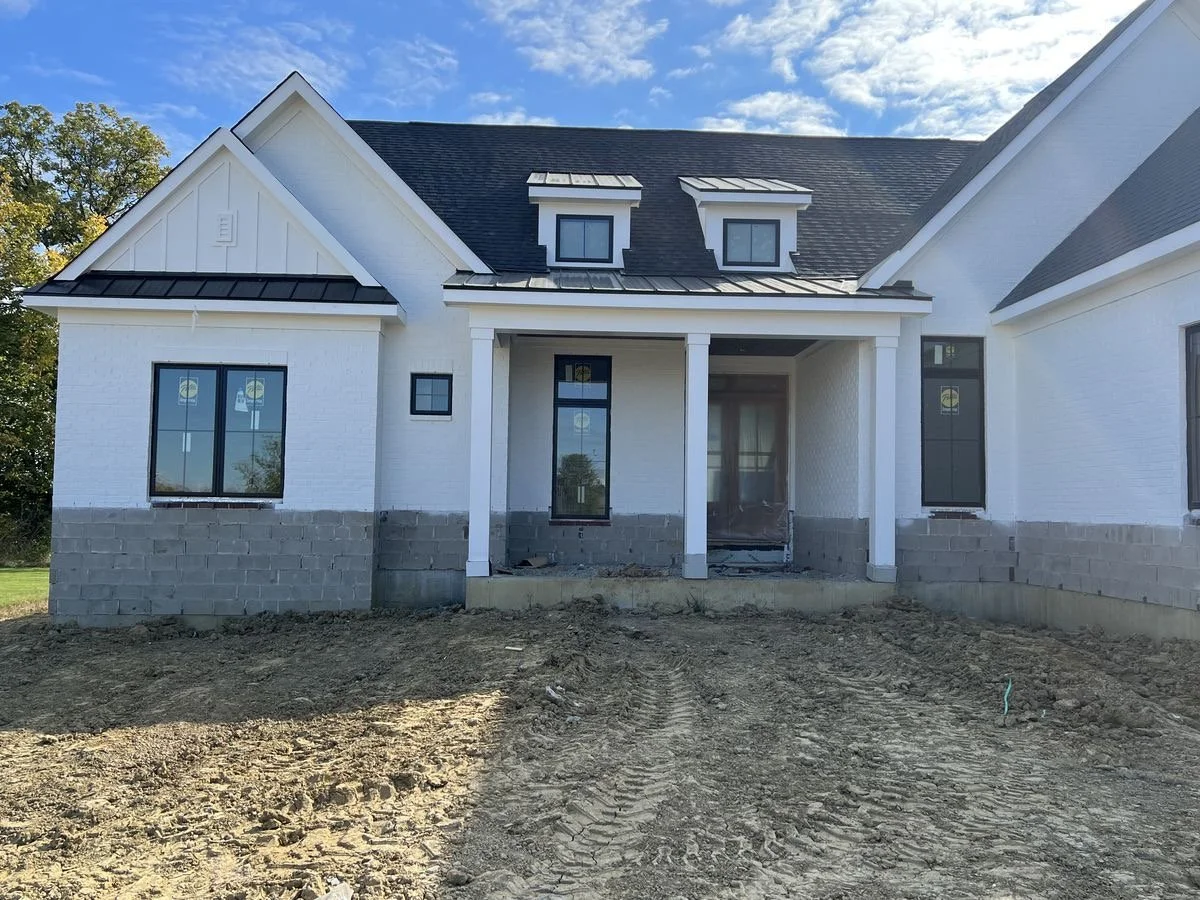
Typically in new construction, the existing topsoil has been removed, leaving nutrient deficient clay and bits of construction debris.