August 2026
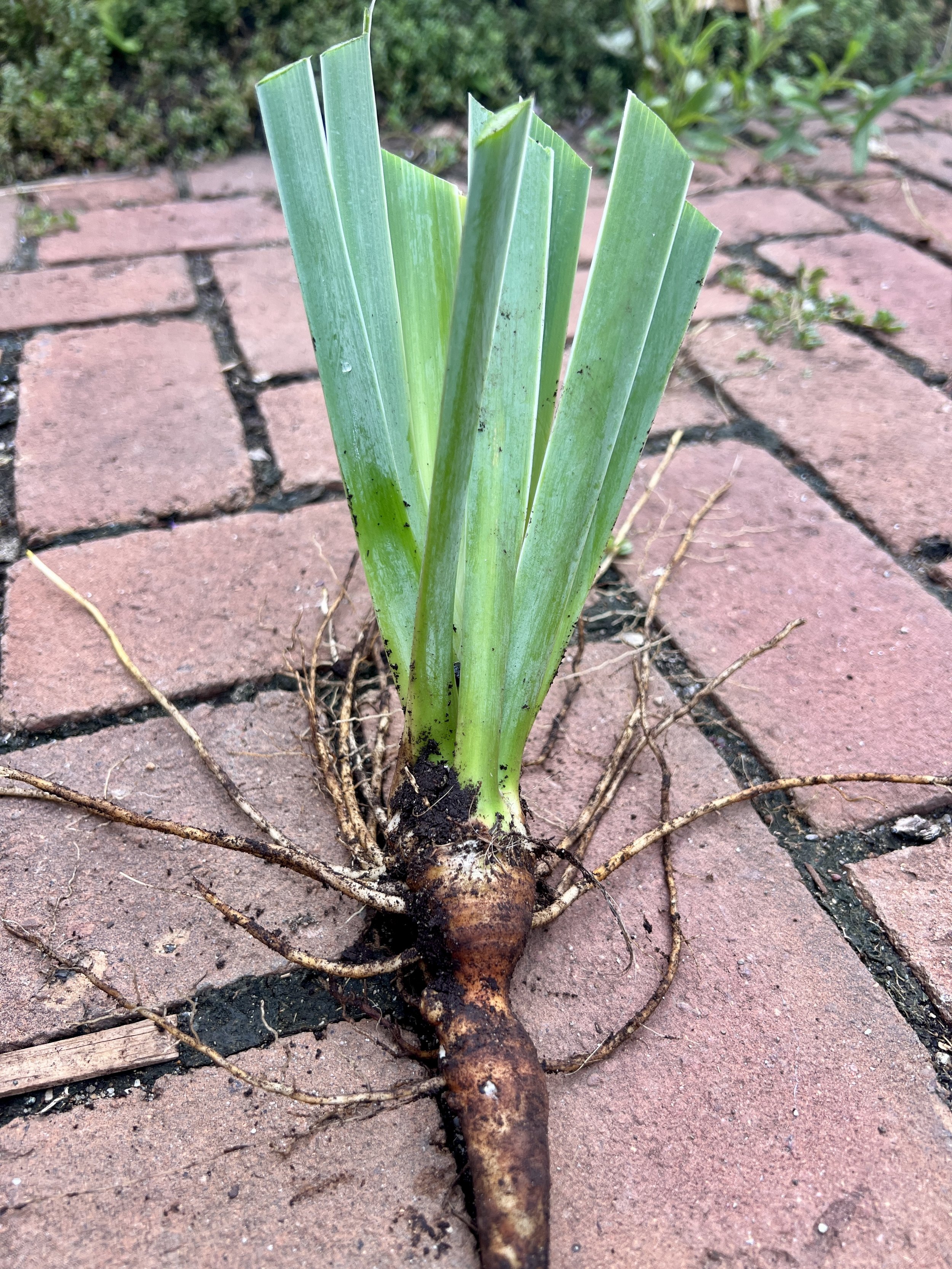
Iris section with leaves trimmed, ready to replant
August is typically the month when our gardens begin to look a bit tired, so it’s a good time to take stock and freshen up your gardening spaces. Last week I finally conceded that the sunflowers I planted this Spring were past their prime, so I removed the dying plants (saving the seeds for the birds this winter), leaving me with some pretty large holes in the garden. There are still three months before our typical first frost, which would be a long time to look at those blank spaces. Fortunately, our local nurseries have a good supply of heat-loving annuals and late season blooming perennials, so I’m excited to start filling those empty spaces over the next couple of weeks.
August is also the best month to divide and transplant a number of perennials that have taken over too much real estate in your garden. One of the perennials I most often see overgrown in area gardens is the bearded Iris. These beautiful spring bloomers grow from rhizomes, which push new growth every year. As the rhizome spreads, the old portion dies, leaving a bare spot in the middle of the expanding clump. The dead rhizomes make the plants susceptible to invasion by the Iris borer, the most destructive pest of bearded Iris.
The best way to revive your Iris patch, rein in its spread, and enjoy more blooms next year is to dig the entire clump. Remove the dead rhizomes in the middle (they will feel hollow or squishy) with a sharp garden knife and separate the remaining rhizomes by hand or with a knife. Each new section should have at least one fan of leaves emerging from the top of the rhizome and a set of roots below. Remove the top two thirds of the leaves with your garden shears and plant each rhizome 12 - 18 inches apart with the top third of the rhizome exposed above the ground. It’s important the rhizome top is exposed, so it can bake in the sun, which promotes flower development. If you follow these steps every three to four years, you should have a beautiful Iris patch for years to come.
Other perennials to divide and transplant in August include: Daylilies, Hosta, Shasta Daisies, Bee Balm, Yarrow, Tall Phlox, and Autumn Joe Sedum. Make sure you water the transplants frequently until the roots have settled into their new home.
August Garden Tasks
In addition to transplanting perennials, here are some other tasks I recommend for August:
Keep watering! Especially your containers. The root systems in your pots and windowboxes have spread significantly to absorb the moisture needed to hydrate all the lush foliage and flowers. If you don’t have an automatic watering system on your containers, you are likely now watering at least once a day.
The slow release fertilizer you sprinkled in your containers several months ago has now been depleted. If you want to maintain that extravagant display of flowers for the rest of the growing season, you need to start feeding them. I use an organic fish/seaweed liquid feed once a week, which keeps the plants healthy and blooming up to the first frost.
Keep deadheading annuals like petunias, lantanas, and verbenas. This will improve the overall look of the plants, making them appear fuller, as well as forcing new blooms. Now is also a good time to prune back your lavender to a nice compact shape, keeping it from getting too leggy and woody. You can now also remove any yellowed lily stems.
Consider adding some fall blooming perennials to those bare spots in the garden. Asters, mums, and goldenrod will soon be available, extending the flowering season.
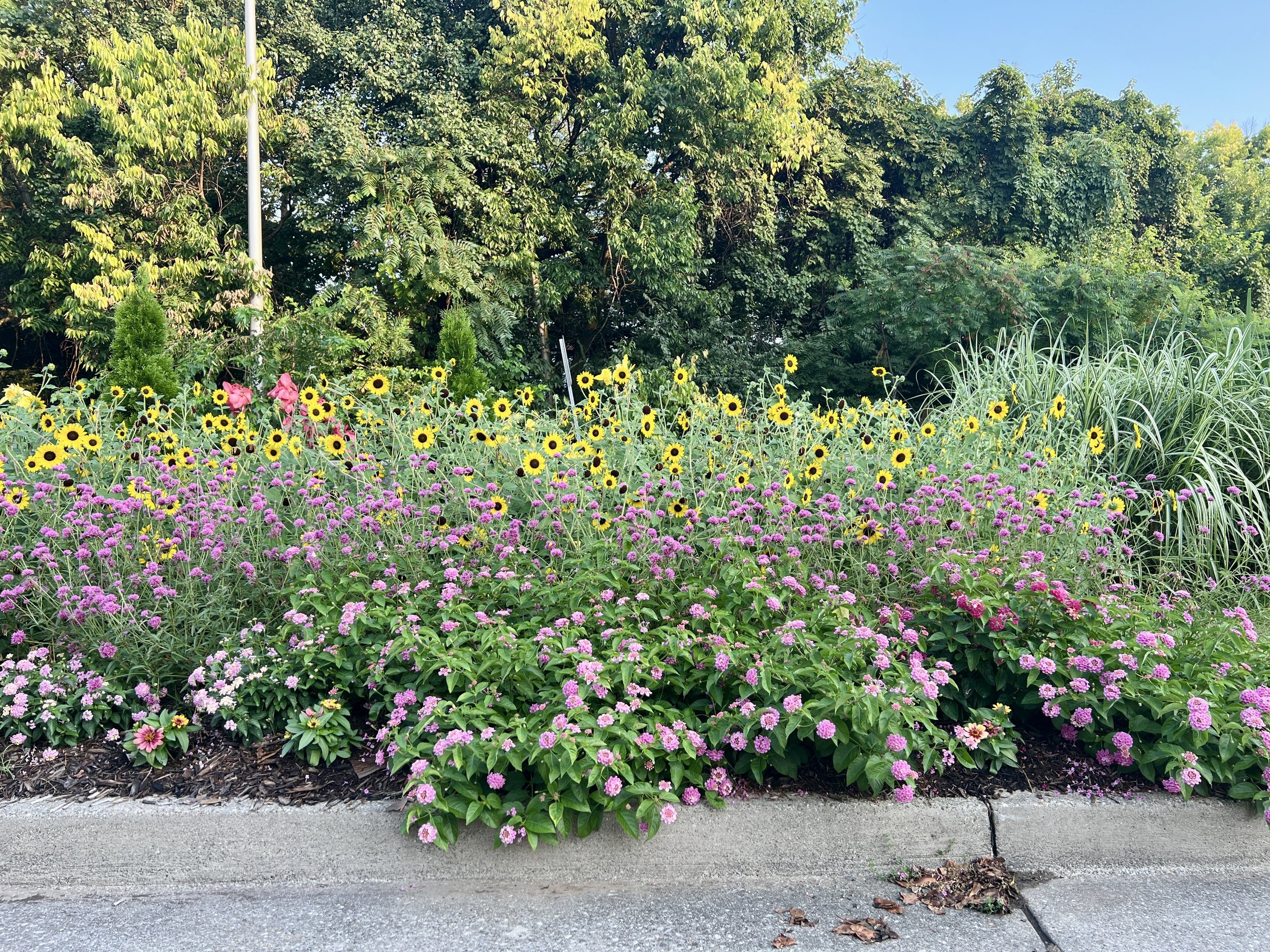
The newly planted “Lemonade Garden” on the exit ramp - all pinks and yellows
August Garden Tip - Drought Tolerant Containers
Are you one of those people who hates to water your containers, especially at this time of year when it becomes a daily chore? I have a number of clients who fall into this category, so thought I would experiment this summer with more water-wise container designs, specifically with cacti and succulents. What I have found is that you can still have color and architectural interest using these drought tolerant plants. In the first photo below, you will see a container I designed using primarily succulents. I was able to use my favorite container design style of Thriller (the tall yellow and green Sansevieria), Fillers (blue Senecio, yellow/red Sitara’s Gold, and purple Echeveria), and Spillers (String of Pearls and String of Dolphins). I topped the potting soil with small red gravel to keep the foliage from sitting on potentially soggy soil, which could cause the leaves to rot.
The second photo shows the beautiful architectural shapes of three variegated Agaves. There’s no need for flowers in this dramatic display.
The third photo highlights three very differently shaped succulents cascading down our unused back steps. Starting at the top are three “Peruvian Apple” cacti, followed by three “Roadkill” cacti on the center step and three “Flapjacks” Kalanchoe occupying the bottom step. All are underplanted with drought tolerant Wooly Thyme, which creates a waterfall type effect.
The last photo is of my Sand Dollar cactus, which provided a pleasant surprise, blooming all summer long.
All of these containers can survive on just the rainfall we receive, even in a drier summer. If you are interested in trying some more drought tolerant designs in your garden next Summer, I can highly recommend all of these.


Happy Gardening!

Our Limelight Hydrangea is clearly happen in this location