September 2026
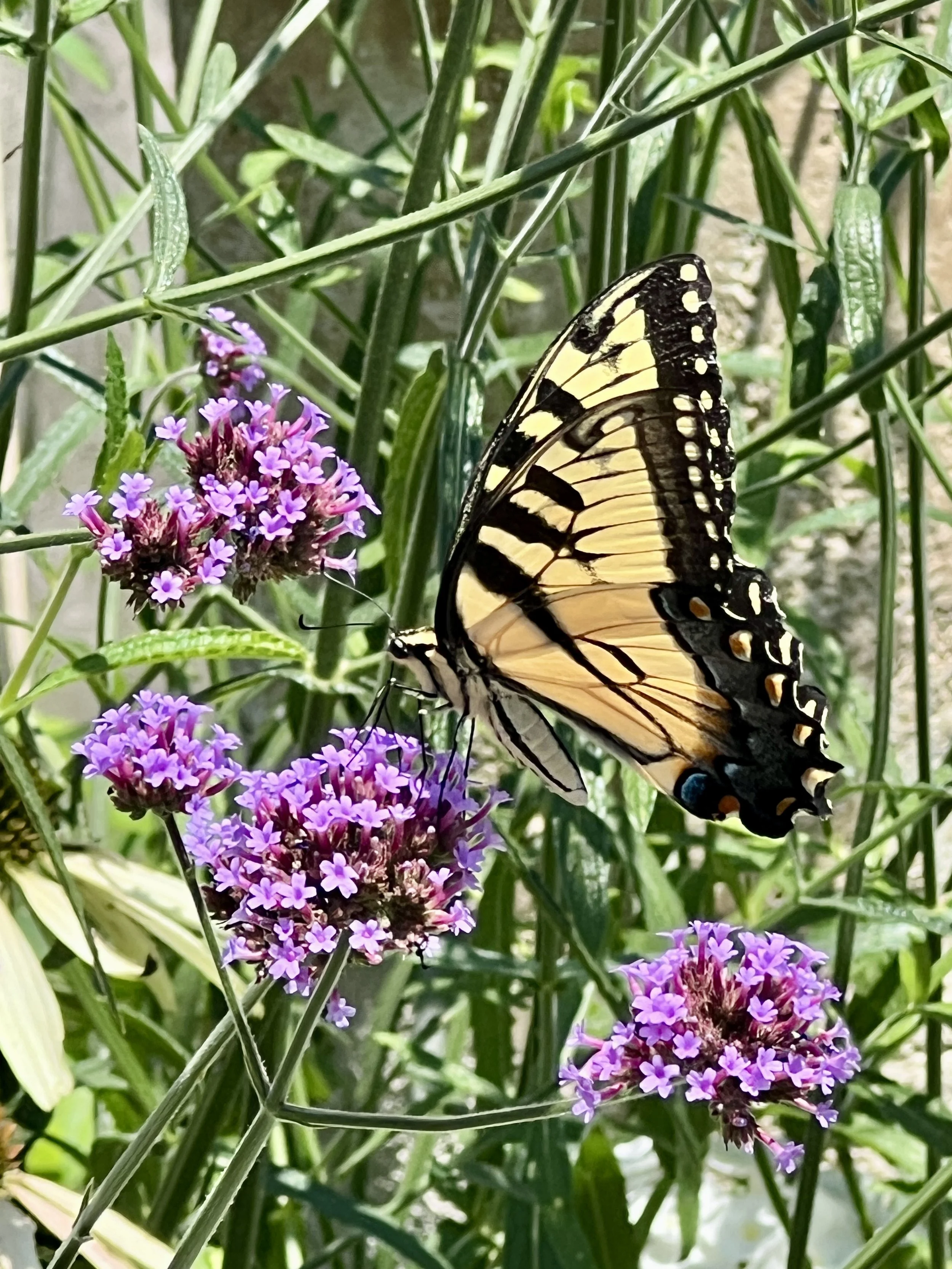
Swallowtail on Verbena Bonariensis in my garden
We just wrapped up a surprisingly and mercifully wet and cool August, but September looks to be coming in like a blast furnace with temps in the mid 90s and triple digit heat indices. It hasn’t rained in 10 days and there doesn’t appear to be any precipitation in the offing for the next week, so my first piece of September advice is to water, water, water. It’s especially important for Azaleas, Rhododendrons, and Camellias as they have already set their flower buds for next Spring. If you don’t keep them hydrated in August and September, the buds are likely to turn brown and fall off next April, just as you’re expecting those beautiful blooms to burst forth.
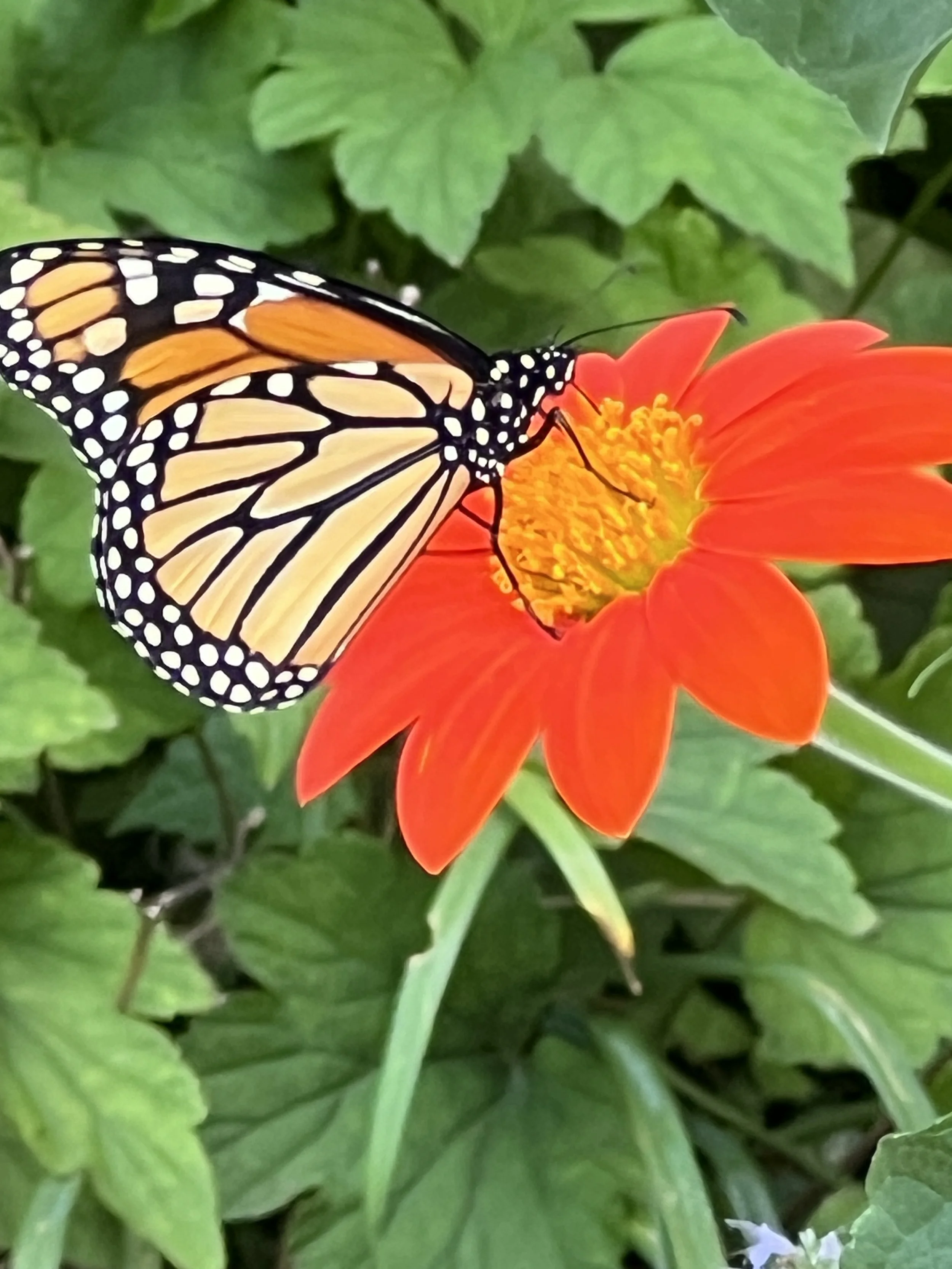
September is a transition month for our gardens, as they begin to wind down for the season. The days are getting noticeably shorter (we lose an hour and fifteen minutes of daylight this month) and the temperatures also begin to drop (our normal high drops from 83 to 73 and our low from 62 to 52). These changes in light and temperature bring about a different feel in the garden. We see colors differently as the sunlight changes to a lower angle in the sky and you may need a jacket now as you enjoy your morning coffee in the garden. One of my favorite things about the September garden is the increased presence of butterflies, especially Monarchs as they pass through our area on their way back to Mexico for the Winter. I’m so happy to have planted more pollinator attractors this Spring. It has really paid off with the presence of many more bees, butterflies, and hummingbirds (see pics below). Hopefully you’ve planted some fall bloomers, like asters and tithonias to help feed these hungry travelers.
In addition to enjoying the cooler weather and perhaps some rain, let’s take a look at what else you should think about for your garden this month…


September Garden Tasks
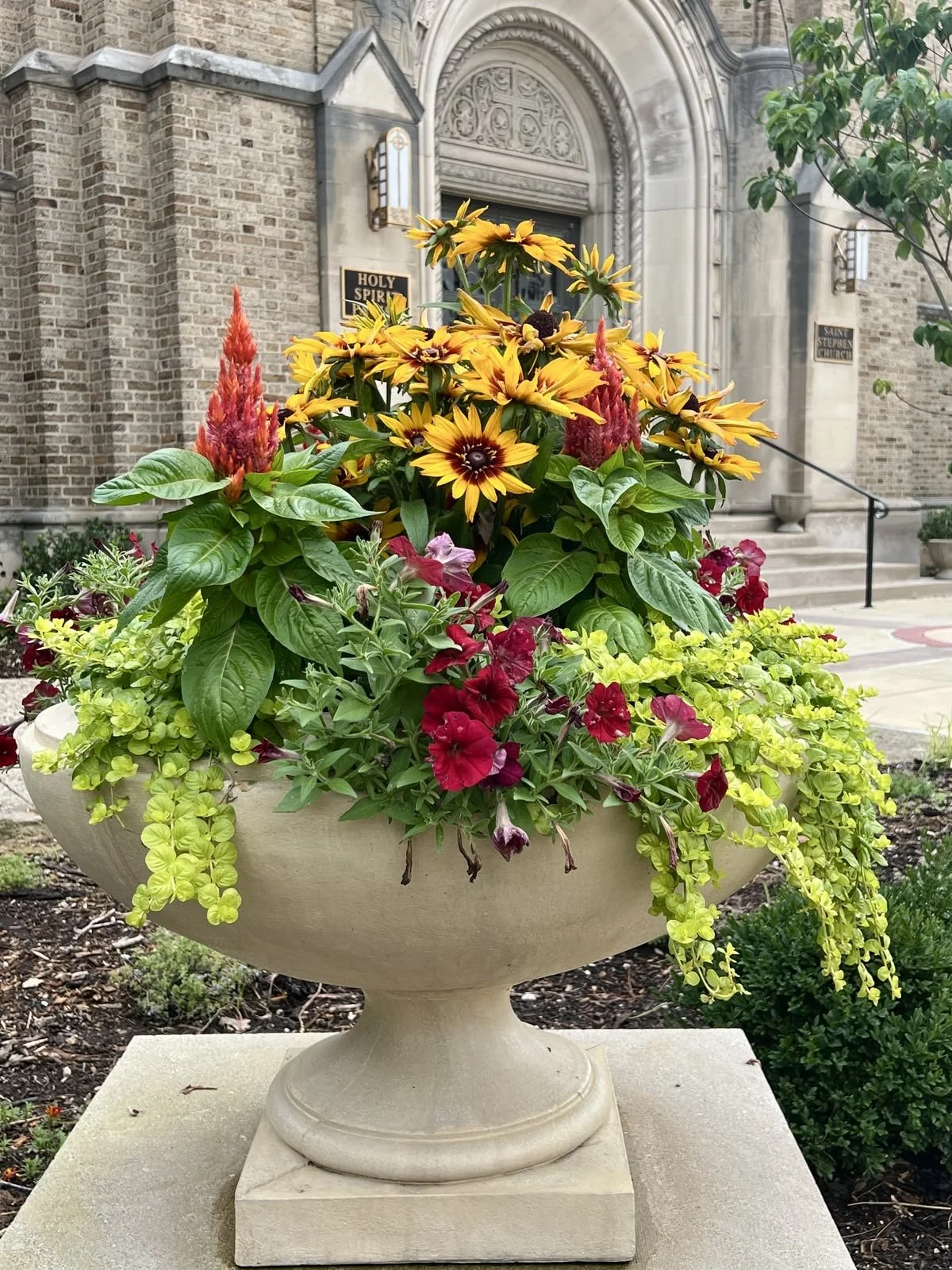
Usually by the first of September, I feel the need to start switching over my containers from summer plantings to fall combos. The nurseries are full of great autumn options like asters, mums, cabbages, grasses, and fall blooming perennials. See some photos below of a few containers I’ve already transitioned for clients.
Stop fertilizing plants in your garden. You no longer want to encourage additional growth, as that new foliage is tender and very susceptible to the frosts that will likely occur at the end of next month.
September is a good month to dig, divide, and replant perennials that have grown too big for their space. The roots will have time to establish while the soil is still warm and they will be ready to put on a show for you next year. Trim back the foliage to lessen the shock of the transplanting.
If you have some bare spots in the garden consider planting some fall blooming perennials to provide color through November.
Now is the time to order your Spring flowering bulbs like daffodils, crocus, and tulips. You can plant the crocus and daffodils in October and the tulips at the beginning of November. I planted Gladiator and Ambassador varieties of Alliums last year and they put on a spectacular show in our garden this spring. I will definitely be ordering more